

Responsible and humane harvest of furbearers is a primary objective for all trapping activities and is guided by legislation and standards of conduct that have been developed over time with input of trappers and wildlife managers. Whether your trapping pursuits involve setting snares for fox, coyote, wolf or lynx, using body grippers for mink or marten (Labrador) or using water sets for aquatic furbearers, choosing the appropriate location for your set is an important consideration to help avoid capturing animals that are not legal to trap. Similar to Snaring and Trapping Requirements to Support Newfoundland Marten Recovery there are also a number of trap designs and/or adaptations to existing gear that trappers can use generally to avoid accidental and sometimes lethal capture of non-target animals.
Additional trapping practices and ways to avoid capture of non-target species can be found here.
Furbearer Trapping
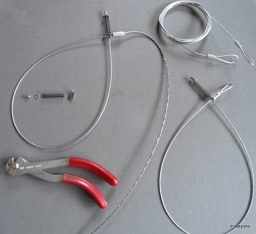
For the island of Newfoundland, break-away devices such as “S” or “J” hooks placed on fox, coyote, lynx or wolf snares are now required and is an easy adaptation that trappers who build their own snares can use to potentially reduce capture of wildlife such as moose, caribou and black bears or free ranging livestock. The snare shall include a breakaway device to cause the snare loop to disassemble when 340 kilograms or less of static force is applied. This is achieved by adding a “J” hook to the base of a slide-lock or “S” hook to a cam type lock or by adding a breakaway ferrule to the end of snare. The S, J hook or ferrule retains enough strength to capture the intended animal but the strength of larger animals will break the hook or breakaway ferrule and allow them to escape relatively unharmed. Purchasing snares constructed in this fashion from trapping suppliers is widely available. Adding a stop to the snare so that it is still effective for capturing furbearers but allows a moose or caribou’s leg to slip through is also beneficial. There is some variability in the cost and effectiveness of break-away devices that trappers will need to consider, particularly for larger furbearers such as wolves. The end result, however, is that these devices can make a difference towards protecting wildlife or livestock that are not meant to be captured in the first place. Learn more about their use by contacting trapping supply retailers, the Newfoundland and Labrador Trappers Association or the Wildlife Division.
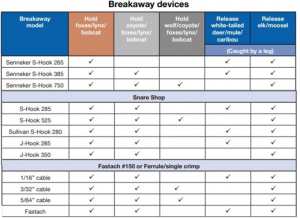
The table below summarizes results of current research by the Trap Research and Development Council for guidance on appropriate breakaways to use for capturing target canids/felids but allowing the release of moose and/or caribou. The snare shall include a breakaway device to cause the snare loop to disassemble when 340 kilograms or less of static force is applied.
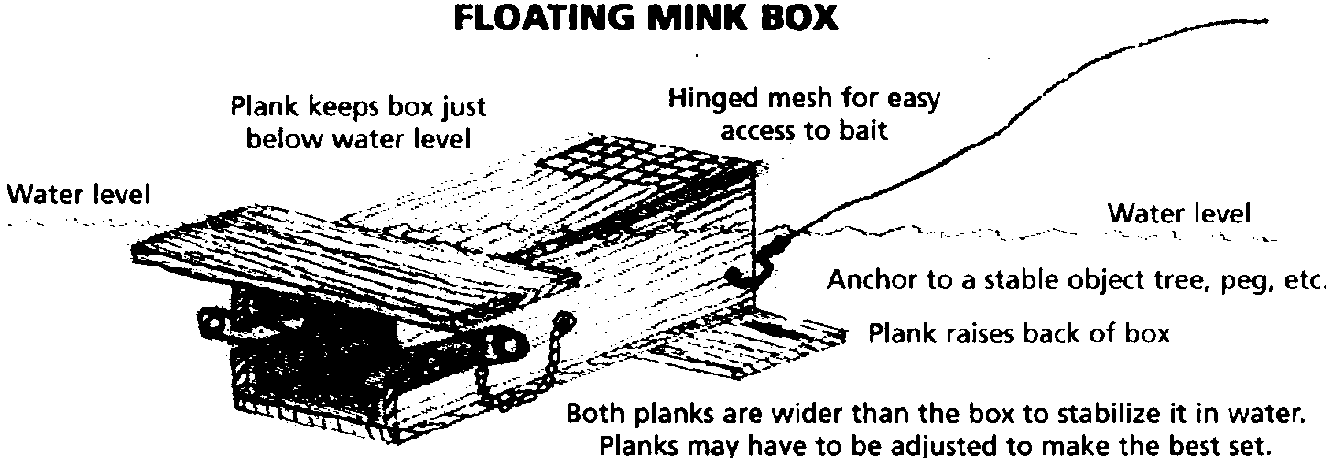
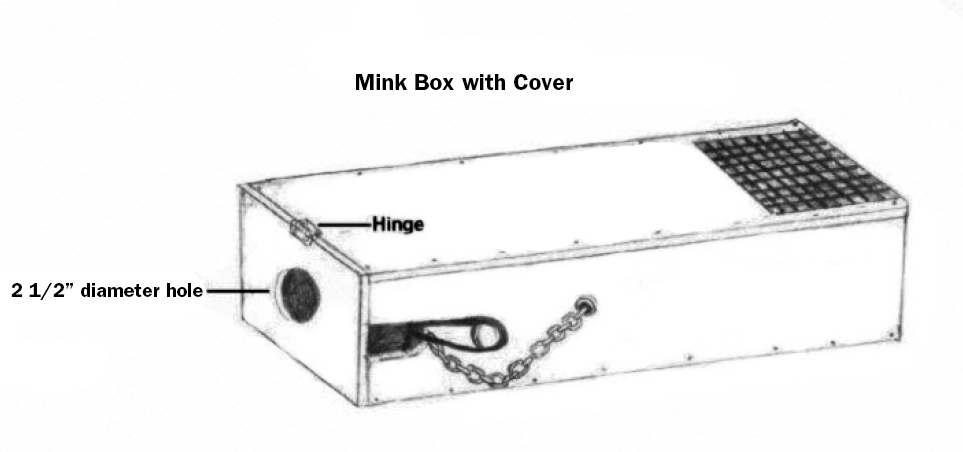
“Contained” body gripper traps are very effective and, in certain circumstances, can be used to avoid non-target animals. For example, body grippers set inside baited floating wooden boxes (mink box) work very well for capturing mink over water and reduce the risk of trapping species such as the Newfoundland Marten. Body gripper traps set inside a floating mink box also make it very difficult for domestic animals to get into. Where there are no concerns for Newfoundland Marten, mink boxes set on land that have a cover with a 2 ½ inch hole also become quite effective for reducing captures of other non-target animals.
Small Game Snaring
Use of 22-Gauge Brass Snare Wire and Picture Cord
- In order to reduce the unintentional capture of Newfoundland marten in snares, the province implemented a requirement that only 22-gauge brass wire and 6-strand braided wire (also known as picture cord) can be used to snare small game. These types of wire are known to retain snowshoe hare while releasing marten. The following best practices can be implemented to maximize success of retaining target species using brass wire and picture cord:
- Not all 22-gauge brass wire are the same, try different brands and select proven wire
- To prevent kinking, make snares in the field (do not carry snares in pocket)
- Do not reuse wire, it is more likely to break
- Additional best practices for responsible snaring include:
- Check snares daily, preferably in morning in case an animal is not killed
- Remove snares on or before season closing date
- Avoid putting snares in areas frequented by the public or pets
Trapping/Snaring Near Communities
- Consider placing signs near active trapping areas to warn the public and pet owners of their presence.
- Have the landowner’s permission before trapping on private land.
- Do not set traps in areas where pets or farm animals may be caught.
- Check traps regularly, preferably in the morning and observe mandatory checks of live holding devices.
- Learn how to make carcasses a useful resource. Do not leave animal carcasses where people may be offended.
- Do not offend those who may be sensitive about fur harvesting.
- Always retrieve all set traps and snares at the end of each season.