

Description, Distribution and Biology
- Herring are a pelagic species widely distributed throughout Newfoundland and Labrador, with populations found along Newfoundland’s west, east and south coasts and the coast of southern Labrador.
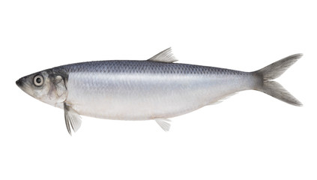
- Herring can be recognized by:
- Their blue to olive colored back and silver sides;
- A deeply forked tail; and
- Large smooth scales.
- Herring is a smaller fish, typically ranging from 20 to 30 centimeters in length and weighing between 100 and 500 grams.
- Herring mainly feed on zooplankton, krill and fish larvae.
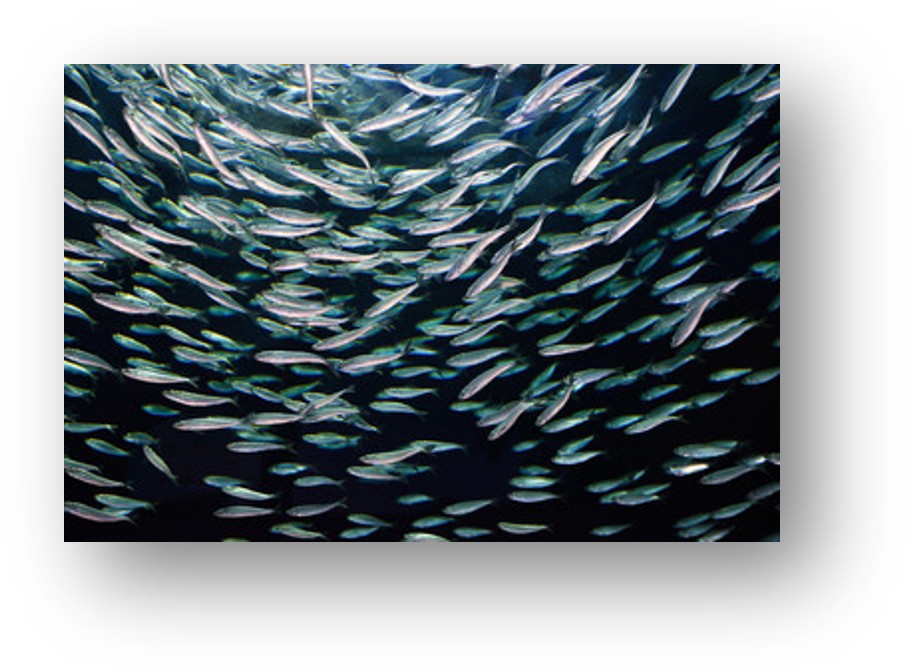
- Herring travel in tight schools as a means of protection to confuse predators such as whales.
History of the Herring Fishery in Newfoundland and Labrador
- Historically, the southeast coast of Newfoundland has been the province’s primary herring fishing area but declined during the 1950s and early 1960s.
- The east coast of Newfoundland and Labrador was not a major contributor to the Newfoundland commercial herring fishery. However, this fishing area experienced an increase in the early 1970s due to the decline in herring landings along the south coast and an increasing market demand for herring as food.
- The herring fishery on the west coast of Newfoundland dates back over 150 years, and for the last 50 years has been the most stable herring fishery in Atlantic Canada.
- The herring fishery in Newfoundland and Labrador continue to support both commercial food and bait fisheries.
- Common fishing methods used:
- Fixed Gear:
- Mobile Gear:
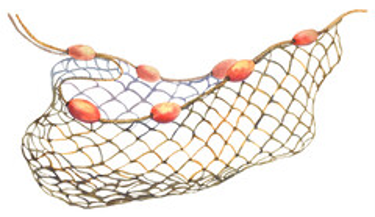 Purse seines get their name from the series of rings along the bottom of the net. Once the fish are enclosed, a cable called the “purse line” is pulled tight, closing the bottom of the net like a drawstring purse.
Fun Facts
- Herring can produce 30,000 to 200,000 eggs at one time.
- During spring spawning, massive groups release billions of eggs and milt, turning coastal waters a bright milky turquoise color.