

Description, Distribution and Biology
The Atlantic mackerel is a pelagic species that is widely found throughout the northwest and northeast areas of the Atlantic Ocean. In the northwest Atlantic, the Atlantic mackerel is known to travel from North Carolina, USA to as far as Northern Labrador.
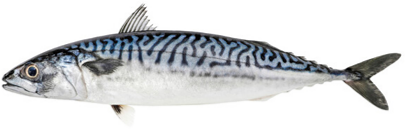
- Atlantic Mackerel can be recognized by:
- A slender, straight body with a deeply forked tail
- A metallic blue green back, shiny sides and a silver belly.
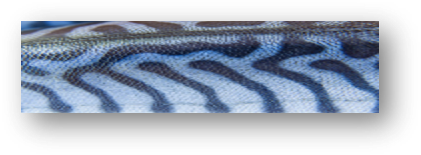
- Wavy vertical stripes running across its back.
- Atlantic mackerel typically reach an average length of about 45 cm, can weigh up to 800 g and live for more than 15 years.
- Atlantic Mackerel primarily feed on plankton (small crustaceans, fish eggs and larvae) and other small fish.
- Like many other pelagic fish, mackerel swim in large, fast-moving schools that can stretch up to 32 km long.
History of the Mackerel Fishery in Newfoundland and Labrador
- The commercial Atlantic Mackerel fishery in North America has a history dating back to the 1600s. Throughout the 1800s, the fishery was primarily focused on food production and relied on beach seines, nets, and hand lines. The development of improved salting techniques in the 1820s contributed to a rapid expansion of the fishery.
- Today, Atlantic mackerel is an important species that supports commercial, bait, recreational fisheries, as well as Indigenous food, social, and ceremonial (FSC) fisheries throughout eastern Canada.
- In eastern Canada, a significant amount of the commercially harvested mackerel is used as bait for the fisheries targeting:
- Americal Lobster
- Snow Crab
- Atlantic Bluefin Tuna
- Atlantic Halibut
Fun Facts
- When feeding on tiny plankton, tight schools of mackerel swim together with their mouths wide open, acting like a moving net.
- Unlike many other fish, Atlantic mackerel do not have a gas-filled swim bladder to help them float. To keep from sinking, they must swim constantly.