

Description, Distribution and Biology
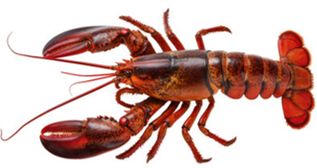
- American lobster can be recognized by several distinctive features:
- A long-bodied shape with a hard shell that is typically brown to olive green in colour, but can also appear red, orange, or black.
- Five pairs of walking legs, including a prominent pair of large claws used for feeding, defense, and crushing prey.
- A hard outer shell that provides protection and must be shed periodically as the lobster grows.
The American lobster gets its name from the fact that it is the lobster species native to the Atlantic coast of North America, distinguishing it from the European lobster found across the Atlantic Ocean. - American lobster is found throughout the northwest Atlantic Ocean, ranging from the coast of North Carolina to the coastal waters of Newfoundland and Labrador.
- American lobster are predators and scavengers that feed on crabs, molluscs, worms, sea urchins, sea stars, fish, and other bottom-dwelling marine organisms.
- American lobster can grow to impressive sizes, growing as long as 60 cm and have been found weighing up to 44 lbs.
- Like other crustaceans, lobster grow by molting, a process in which they shed their hard exoskeleton many times throughout their lifespan.
- American lobster are predators and scavengers that feed on crabs, molluscs, worms, sea urchins, sea stars, fish, and other bottom-dwelling marine organisms.
History of the American Lobster Fishery in Newfoundland and Labrador
- The lobster fishery in Newfoundland and Labrador dates back more than 150 years, in 1889 lobster landings of 8,000 tonnes were reported.
- The fishery experienced a significant decline in the 1920s, leading to a two-year closure to help protect and rebuild the resource.
- Since the mid-1970s, the lobster fishery has been carefully managed through conservation and management measures aimed at rebuilding and sustaining lobster stocks.
- In recent years, lobster landings have increased substantially in Newfoundland and Labrador, making lobster one of the province’s most economically valuable fisheries.
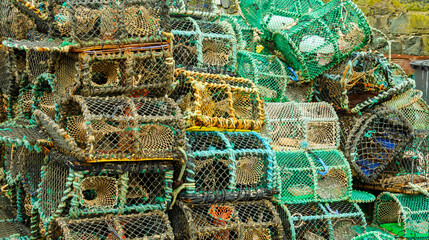
- Commercial fishing methods include:
- Baited lobster traps
Fun Facts
- Lobsters are capable of surviving for more than 50 years.
- Lobsters have the remarkable ability to regrow a lost claw through the molting process, although full regeneration may take several molts.
- Lobsters use specialized sensory receptors on their legs to taste and smell their surroundings, allowing them to detect food and navigate their environment.