Description, Distribution and Biology
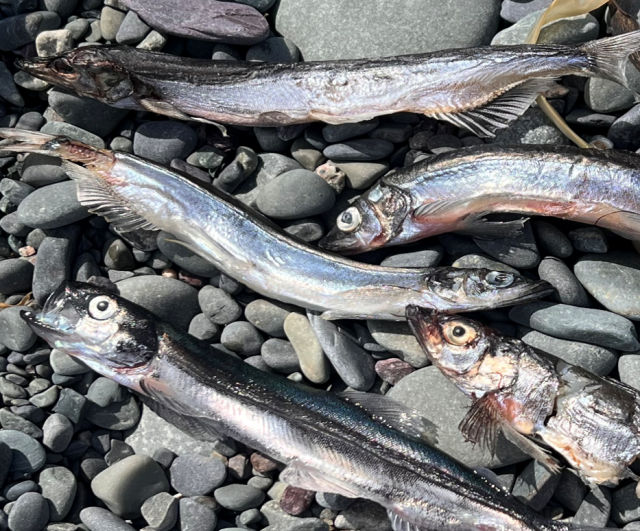
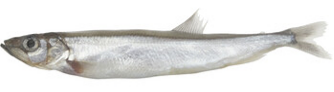
- Capelin can be identified by several distinctive features:
- A silvery belly and sides, with a metallic blue-green coloration along the back above the lateral line.
- A long, slender body with a pointed snout.
- A schooling behaviour, often forming large, dense groups that move together through coastal waters.
- Capelin are a pelagic species widely distributed around Newfoundland and Labrador, particularly along the east and northeast coasts where they are most abundant.
- Capelin are relatively small fish, generally reaching lengths of 13–20 cm and weighing as much as 45 grams.
- Capelin mainly eat tiny marine animals known as zooplankton. Capelin themselves are an important food source for many larger marine animals.
History of the Capelin Fishery in Newfoundland and Labrador
- Historically, capelin have been used for a variety of purposes, including human consumption, animal feed, bait in commercial fisheries, and fertilizer in agriculture.
- Today, most commercial capelin harvesting in Newfoundland and Labrador takes place along the east and northeast coasts of Newfoundland. Although there is some harvest in other areas of the province.
- Traditional methods of preserving capelin included drying, smoking, salting, and freezing.
- Common commercial fishing methods include:
Fun Facts
- During the summer, millions of capelin gather in large schools and migrate to coastal areas to spawn in shallow waters. This annual event, commonly known as the capelin roll, typically occurs in Newfoundland and Labrador between mid-June and July.
- The arrival of the capelin roll is widely regarded as a sign of summer in Newfoundland and Labrador, bringing opportunities to observe humpback whales that gather along the coast to feed on these small, fast-moving fish.