

Description, Distribution and Biology
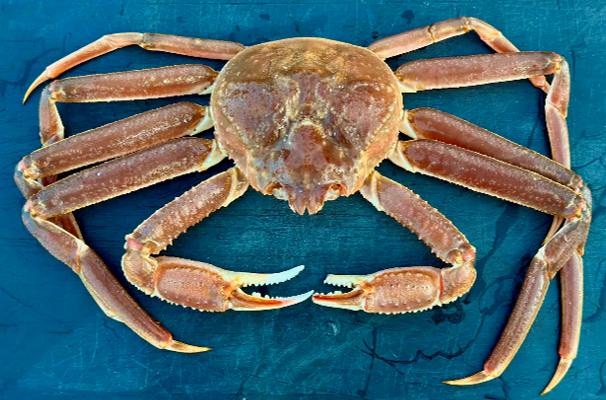
- Newfoundland and Labrador (NL) snow crab is a crustacean that can be identified by several distinctive features:
- A small, rounded, and relatively flat shell (carapace) that ranges in colour from reddish-brown to dark brown.
- A white to yellowish underside.
- Five pairs of long legs, with the front pair modified into claws used for feeding, handling prey, and defense.
- Snow crab is found in coastal waters all around Newfoundland and Labrador coasts.
- Male snow crab grow significantly larger than females, reaching weights of up to 1.4 kilograms, while females usually weigh only half as much.
- NL snow crab are predators and scavengers, feeding on a diverse range of marine organisms such as fish, clams, worms, brittle stars, shrimp, and other crustaceans.
History of the Fishery in Newfoundland and Labrador
- The first snow crab landings in Newfoundland and Labrador occurred in the late 1960s, when snow crab were caught as by-catch in the groundfish gillnet fishery in Trinity Bay.
- The snow crab fishery experienced significant expansion in the 1980s, helping establish Newfoundland and Labrador as one of Canada’s premier snow crab-producing regions and a key player in the industry.
- The Newfoundland and Labrador snow crab fishery has been Marine Stewardship Council (MSC)certified since 2013, confirming that it meets internationally recognized standards for sustainability and responsible fishery management.
- Fishing method:
- Baited pots, commonly known as “crab pots”

Fun Facts
- Snow crab get their name from the cold, icy waters of the North Atlantic and North Pacific oceans where they live and thrive.
- Snow crab grow by periodically shedding their hard outer shell through a process known as molting, which allows them to increase in size before a new shell hardens.