

Policy Overview
- Policy Objectives
- Minister of Fisheries and Aquaculture (Minister)
- Licensing, Inspection and Quality Assurance Division (LIQA)
Licensing Policies
- Conditional Fisheries Processing Licence
- Primary Processing Licences
- Secondary Processing Licences
- Aquaculture Processing Licences
- In-Province Retail Processing Licences
- Regular Fish Buyers Licences
- Outside Buyer Licence (All Species Excluding Sea Urchin)
- Minimum Processing Requirements Exemption Request Form
- Licence Transfers
- Change of Operator
- Plant Closures
- Minimum Production Requirements
- Agency Agreements
- Labrador
- Licence Holder Reporting Requirements
- Policy for Companies with Financial Obligations to the Province
- Associated Company (de facto control)
- Appeals
Licensing Criteria Considered for Approval of Processing Licences
- Resource Thresholds
- Resource Availability
- Business Viability
- Regional Balance
- Location Criteria
- Corporate Concentration
- Compliance
Annex C – Non-Refundable Application Fees
Annex D – NAFO Management Zones
Policy Objectives
The primary objectives of government’s Licensing Policy Framework for Fish Processing and Fish Buying are to:
- Provide the conditions for a stable and competitive processing sector to exist with minimal public support;
- Promote employment levels that provide adequate incomes;
- Promote cooperation in the industry that enhances product quality and optimizes total returns from processing available resources; and,
- Seek a regional balance of resource availability and processing capacity.
Minister of Fisheries and Aquaculture (Minister)
The Minister has legislative authority pursuant to the Fish Inspection Act and associated regulations to issue, suspend and cancel licences and to deny application for a licence.
The Minister’s main objectives are to:
- Ensure clear, consistent, accountable and transparent licensing decisions.
- Promote competition and limited barrier to entry into the industry.
- Encourage sustainable sector growth and regional development.
- Promote consistent compliance with processing and production requirements.
Licensing, Inspection and Quality Assurance Division (LIQA)
LIQA is responsible for processing licences for fish processors and fish buyers and performing all administrative functions associated with processing an application, including coordination or application review and completion of analysis to inform a licensing decision by the Minister. All questions pertaining to an application, the application process or an already issued licence should be directed to LIQA at (709) 729-3736 or via email at falicensing@gov.nl.ca .
Conditional Processing Facility Licence
Conditional Processing Facility licences are an authorization issued by the Department Fisheries and Aquaculture (FA) that provides an applicant with a conditional right to develop, purchase, or construct a fish processing facility.
Policy
- A Conditional Processing Facility licence allows a project to proceed contingent on meeting all specified requirements before a fish processing licence can be issued. It does not grant permission to process fish.
- The Conditional Processing Facility licence indicates that FA has reviewed the applicant’s proposal and supports the project’s advancement.
- By accepting this licence, the applicant acknowledges that it is granted based solely on the applicant’s demonstrated intent and commitment to buy, build, or establish a fish processing facility. Issuance of a Fish Processing Licence is not guaranteed and will occur only if all specified conditions are met to the satisfaction of the Minister of Fisheries and Aquaculture.
- The holder of a Conditional Processing Facility Licence is still responsible for completing all requirements, within any timeline set out by FA, to proceed from a Conditional Processing Facility Licence to a Fish Processing Licence.
Primary Processing Licences
Primary processing licences are the most prevalent in the industry and so are more closely controlled to address overcapacity concerns.
Policy
- Primary processing licence holders may source fish directly from harvesters.
- Primary processors may only process those species categories specifically authorized on their processing licence.
- Primary processors must process each authorized species to at least meet the minimum processing requirements contained in the Schedule within the Fish Inspection Operations Regulations.
- Secondary processing is encouraged, so holders of primary processing licences may also produce secondary processed products for those species categories they are licensed to process.
- Limited numbers of species category authorizations may be issued to active primary processing licence holder for emerging fisheries species based on resource availability and regional balance Further licences for emerging fisheries species will only be considered when there is evidence that there is enough resource for expansion.
Secondary Processing Licences
The policy on secondary processing licences reflects Government’s desire to encourage value-added and further processing of fish products beyond the primary processed stage.
Policy
- Secondary processing licence holders are authorized to process all species categories, but the product forms produced must conform to the definition of Secondary Processing as defined in the Fish Inspection Administrative Regulations.
- Secondary processing licence holders may source fish directly from harvesters.
- Secondary processors must process all products for at least the minimum required to be considered “secondary products” (see definition) and will not be authorized to engage in the production for sale of primary processed products.
Aquaculture Processing Licences
The aquaculture industry is characterized by sites dispersed over several geographical areas of the province and harvested year-round. Processing facilities that handle fish sourced from aquaculture operations may hold a valid licence even if they do not operate on a year‑round basis and may be closed during certain seasons. An Aquaculture Processing Licence explains why a facility may be authorized to operate during periods when most other fishing seasons are closed.
Policy
- Aquaculture processing licence holders may be authorized to process all cultured/farmed fish and marine plants sourced from Newfoundland and Labrador aquaculture sites licensed under the Aquaculture Act, 2023.
- Proximity of the processing facility to the aquaculture site is crucial to preserving quality, particularly for species which are marketed live.
- New licences for aquaculture processing establishments may be considered on a case-by-case basis where a detailed, viable application is submitted.
In-Province Retail Processing Licences
In-province Retail Processing Licence was established to improve the quality of seafood being prepared for local consumption. Retail processors are authorized to buy fish directly from harvesters but must sell their products within Newfoundland and Labrador.
Policy
- Due to concerns over the possible implications for increases in groundfish processing capacity, a freeze has been implemented on the issuance of new in-province retail processing licences.
- There are no species restrictions for in-province retail processing licences. This will enable licence holders to purchase and process all available species for sale within the province.
- In-province retail processors may source fish directly from harvesters. No new in-province retail fish processing licences will be issued. Existing in-province retail processing licences may be transferred in accordance with the policy on licence transfers.
- As an alternative to a retail processing licence, seafood retailers may apply for a Food Establishment Licence through the Department of Government Services. These retail establishments are authorized to source fish directly from harvesters.
Regular Fish Buyer Licences
Holders of this licence are only authorized to purchase or market the species/species category indicated on their licence.
Policy
- There is currently a freeze on the issuance of new regular fish buyer licences.
- Licence holders are authorized to engage in or engage in a specific aspect of grading the species or species group noted on the licence. This condition is subject to the terms of the Master Collective Agreement.
- Holders of fish buyer licences may purchase fish directly from harvesters.
- All species other than live lobster and eel have to be transported to a fish processing facility licensed under the Fish Inspection Act to process such species.
- Existing holders of buyer licences will not be granted authority to add or transfer any additional species to their licences.
- If an individual holds an active buyer licence and wishes to incorporate, they may submit a request to the Minister for the licence to be issued in the company name.
- If several active buyer licence holders wish to amalgamate their licences under a new company, they may submit a request to the Minister for a change of operator so that the licences may be issued in the new company name.
- Consideration may be given by the Minister to approve sharing the ownership of the licence within the immediate family of the holder (e.g., parent to child), on a permanent basis only.
Outside Buyer Licence (All Species Excluding Sea Urchin)
Holders of an Outside Buyer Licence may purchase fish directly from harvesters.
Policy
- Outside Buyer Licence holders are exempt from the Minimum Processing Requirements as outlined in the Schedule of the Fish Inspection Operations Regulations.
- Outside Buyer Licence holders are authorized to engage in or engage in a specific aspect of grading the species or species group noted on the licence. This condition is subject to the terms of the Master Collective Agreement.
- Applications for Outside Buyer Licence will be accepted from interested companies meeting the following criteria:
-
- Company is registered and is in good standing in the Government of Newfoundland and Labrador,
- Company is registered and is in good standing with the Workplace Health, Safety and Compensation Commission,
- No outstanding monies owed to the Government of Newfoundland and Labrador, and
- The Licence Holder shall not be a related party (e.g., a subsidiary), shareholder, director, or employee of a licensed processor. A self-declaration form will be provided for attestation to this.
- Successful applicants will be required to:
- Deduct Employment Insurance premiums on behalf of harvesters, and
- Register with Workplace NL and submit returns
- Applications for completion and submission are available at the following link: Fish Processing Licensing Application
- The fee for an Outside Buyer Licence is $2,500 and may be paid here.
- To register to operate as an incorporated company in Newfoundland and Labrador or to verify that you are considered in good standing by the Registry of Corporations in Newfoundland and Labrador, please call 709-729-3317.
- To register and verify whether you are in good standing with the Workplace Health, Safety and Compensation Commission, please contact 709-778-1291 or 709-778-1000.
- To register your business with Workplace NL, please click on the following link: https://workplacenl.ca/employers/register-my-business
- Completed applications and required information should be submitted via email to falicensing@gov.nl.ca
Licence Transfers
Licence Transfer is the movement of one or more species categories from one fish processing facility to another, resulting in the elimination of those species categories from the originating licence. The licence transfer policy helps provide some flexibility for processing facilities where viability and resource availability are demonstrated.
Policy
- Transfer requests for species categories other than snow crab, shrimp, groundfish, and pelagics may be approved based on the established assessment criteria.
- No transfer requests for shrimp, groundfish, and pelagics species category authorizations will be approved unless the transfer will result in the closure of a plant and a reduction in the overall number of species authorizations outstanding.
- There will be no transfers of snow crab licences.
- Transfers may only be considered for licences that have been validated for the year in which the transfer request is made.
- Individual species categories held on a licence may only be transferred between active facilities.
- A transfer request from an active facility to an unlicensed facility will only be considered if all species categories on the licence are to be transferred, resulting in the closure of the originating plant.
- The transfer must examine resource considerations in the regional area from where the licence is transferred as well as the area to where the licence is being transferred.
- Northwest Atlantic Fisheries Organization (NAFO) Management Zones (see Annex E), may be used in determining the impact on regional balance between resource availability and processing activity. Transfers may be considered within and between management zones. Licence transfers within a management zone need not consider the balance between resource availability and processing capacity. Licence transfers between management zones will consider the balance between regional processing capacity and resource availability.
Change of Operator
The control of a licensed processing establishment sometimes changes, with the new operator applying for licences held by the previous operator. It is necessary for the new operator to submit a business plan, for the Minister to determine the new company’s ability to operate the facility and meet their objectives, with respect to employment, operating season and quality initiatives, and the viability of its plans.
A change of operator is not the same as a licence transfer. When a licence is transferred, the licence is moved to a new location, whereas a change of operator involves new principal shareholders, but the physical location remains the same.
Policy
- There will be no change of operator for snow crab licences.
- A change of operator will only be considered for active plants or active buyers licences that have been validated for the year in which the application is made.
- When a plant owner proposes to sell or lease a licensed plant, the proposed new operator must make application to the Minister for the issuance of the fish processing licence in the new operator’s name.
- A change of operator of a fish buyers licence may only be considered where the purchaser buys the company holding the licence, or a licence holder proposes to pass the licence to a member of the immediate family.
- The new operator shall not be a related party (e.g., a subsidiary), shareholder, director, or employee of an Outside Buyer licence holder. A self-declaration form will be provided for attestation to this.
Plant Closures
After a company announces a plant closure or has their processing licences cancelled due to inactivity, any future reopening would be based on established policies related to the new licence.
Policy
- A company may ‘temporarily’ close a plant to consider restructuring options due to unanticipated changes in resource, market, or other conditions.
- If the plant is to be reopened after a year of closure, the licence fees required to reissue the licence will include the fees for the year of closure and the year in which the licence is to be reissued.
- If a processing facility has been inactive for two consecutive calendar years, the licences associated with the facility will be cancelled.
Minimum Production Requirements
Requiring processing facilities and buyers to remain active is a means of ensuring that licences are being utilized. The elimination of inactive species categories and licences will bring about a measure of rationalization over time, resulting in a better balance of processing capacity with resource availability.
Policy
- Activity for a fish processing operation is determined based on monthly production reports required to be submitted to LIQA.
- For a primary processing facility to maintain its authorization to process a species or species category, it must have produced a minimum round-weight-equivalent volume of production for that species or species category in two of five consecutive calendar years.
- For the species snow crab, the requirement is annually.
- The current list of species categories and the corresponding minimum production volumes required to maintain these species categories is outlined in Table 1. If a processing facility has been inactive for two consecutive calendar years, the licences associated with the facility will be cancelled.
- In-province retail processing licences, secondary processing licences, and aquaculture processing licences are not restricted with respect to the species categories which may be processed; however, if there is no activity whatsoever under the authority of the licence for one of the two consecutive calendar years, the licence will be cancelled.
- A Fish Buyers Licence lists those species or species categories which may be purchased under the licence. Buying activity for a particular species category in one of two consecutive calendar years will be sufficient to maintain that species category authorization for the following licensing year.
- In the event of the cancellation of a species or species category authorization or a full licence, any appeals based on extenuating circumstances will be directed to Fish Processing Licencing Board for review.
- The Minister has the right to reconsider the minimum production requirements from time to time as required and amend the Fish Inspection Operations Regulations accordingly.
Minimum Production Requirements for Primary Processing Licence Holders
Table 1
| Species/Species Group | Species and/or Products Included | Minimum Round-Weight Equivalent Production to Maintain Species or Species Group (Tonnes)
2019 2024 |
|
| Clam | Clam, Cockle | 10 | 10 |
| Groundfish | Catfish, Cod, Cusk, Dogfish, Hagfish, Hake, Halibut, Haddock, Monkfish, Pollock, Redfish, Shark, Skate, Turbot, Wolffish (including Groundfish By-Products) | 20 | 20 |
| Other Crab | Rock, Toad, Atlantic King, Porcupine, etc. | 5 | 5 |
| Pelagics | Capelin, Herring, Mackerel, Smelt, Tuna, Swordfish, Squid | 20 | 20 |
| Salmonids (Wild) | Arctic Char | 1 | 1 |
| Sea Cucumber | Sea Cucumber | 1 | 10 |
| Shrimp | Shrimp | 500 | 500 |
| Snow Crab | Snow Crab | 100 Annually (50 in Labrador) | 200 Annually (50 in Labrador) |
| Whelk | Whelk | 5 | 5 |
| All other species | No minimum requirement; however, if a processing facility has been inactive for two consecutive calendar years, the licences associated with the facility will be permanently cancelled. | ||
Note: This list may be amended by the Minister from time to time.
- The Minister will set the minimum production requirements which must be achieved for the species category to be deemed “active”.
- If a species category on a fish processing licence or buyer licence is deemed to be inactive, that particular species category will be removed from the licence.
- If a renewal request for any type of licence is not received for two consecutive licensing years, the licence will be cancelled.
Agency Agreements
The implementation of this Agency Agreement Policy will allow established processors and buyers to maintain their business relationships with their fish harvesters for all species landed.
Policy
- A licensed fish processor holding a processing authorization for a particular species category (the principle) may enter into an Agency Agreement with another licensed fish buyer or fish processor (the agent) who does not hold a similar authorization, enabling them to purchase that species category on behalf of the principal.
- All fish purchased by an agent must be shipped in the form in which it was purchased, directly to the processor or buyer they represent.
- Any licensed processor can establish an agency agreement with any eligible agent by completing the appropriate agency agreement form and submitting copies as required.
- An Agency Agreement must be completed in writing using the approved form. One copy must be forwarded to the LIQA division of the department. Additional copies must be retained by both the Agent and the Principal and made available to an inspector upon request.
Labrador
To support and further develop the fishing industry in Labrador, special consideration may be given to processing plants in this region for the issuance of new licences and additional species authorizations to existing licences.
Policy
- All plants situated in Labrador may be given special consideration where resource availability warrants such New licences and species category authorizations may be added to processing licences in this area without consideration of factors such as resource thresholds.
- Any applications made with respect to Labrador are subject to the merits of each submission and must take into consideration provisions contained in any relevant Land Claim Agreement(s).
- This revision to policy for special consideration to include all of Labrador is warranted due to recent reductions in the number of processing plants and the limited number and distribution of species licences to accommodate landings in the region.
- It is understood that there are many factors that contribute to the difficulties in harvesting and processing fish in Some of these factors include geographic isolation, environmental factors (ice), challenges in transportation, short operating season, etc. The Processing Licensing Policy in the region must be sufficiently flexible to address these concerns and should apply to all of Labrador rather than just the Northern portion.
Licence Holder Reporting Requirements
To monitor the processing sector, respond to changing conditions, and formulate appropriate policies, it is important that statistics are available as needed. Therefore, the collection of daily, weekly and monthly production and purchase data, employment statistics and other required information is essential.
Policy
- The Fish Inspection Operations Regulations require that all fish processing licence holders report their production and other data as requested.
- Licensed fish processors for lump fish are required to submit daily production forms on the day following each day of production.
- Licensed fish processors of capelin, shrimp and snow crab are required to submit weekly production forms on the Tuesday following each week of production.
- Licensed fish processors for all other species are required to submit monthly production and employment forms by the 10th day of the month following the month of production.
- Licensed fish processors may be required to submit additional production and employment information as required from time to time throughout the year.
- If a company’s production or employment is NIL for a particular month, then the company must submit the form, indicating “NIL”.
- When a processor has finished production for the year or for an extended period of time, the department may be advised accordingly, and the reporting requirements will be suspended until production resumes.
- Outside Buyer licence holders are required to report to LIQA as follows:
- At least 24 hours prior to shipping unprocessed fish outside of NL, the Licence Holder shall report the intention to ship.
- Within 24 hours after the shipment leaves Newfoundland and Labrador, the Licence Holder shall submit copies of all shipping documents, such as Bill of Lading, required to verify the actual species, quantity, and destination of the shipment.
- If the required report or information requested is not received by the specified deadline, administrative penalties as prescribed in the Fish Inspection Administrative Regulations may be applied or charges may be laid against the processor or fish buyer in question.
- The department may request additional information as needed.
- All information provided by a processor or fish buyer will be treated confidentially, in accordance with the provisions of the Fisheries Act.
- To ensure that licence holders are submitting accurate production reports, LIQA will conduct regular audits of fish plant production and more frequent audits, as necessary. Auditors have the same powers as “inspectors” under the Fish Inspection Act and regulations
Companies with Financial Obligations to the Province
Policy
Unless the expressed written clearance is provided by the applicable government department, applications for fish processing licences will not be considered if an applicant or an associated company is in default on financial obligations to the Government of Newfoundland and Labrador.
Licence applications will not be considered if one or more of the following circumstances exist:
- The applicant or an associated company of the applicant, as defined below, is in arrears to the Government of Newfoundland and Labrador.
- The company/associated company from whom a licence will be transferred to the applicant is in arrears to the Government of Newfoundland and Labrador.
- The company whose controlling interest is being transferred through a change of ownership application is in arrears to the Government of Newfoundland and Labrador.
- A department of the Government of Newfoundland and Labrador holds preferred shares in the company submitting the application or an associated company of that applicant.
- A department of the Government of Newfoundland and Labrador holds preferred shares in the company transferring the licence or turning over ownership.
- A department of the Government of Newfoundland and Labrador holds preferred shares in an associated company of the company transferring the licence or turning over ownership.
Associated Company (de facto control)
Two companies are considered to be associated if one or more of the following conditions exist:
- One of the companies has de facto control of the other.
- A person or group of persons hold de facto control of both companies.
- The person controlling Company 1 is “related”, as defined below, to the person or persons controlling Company 2, and the person controlling Company 1 owns at least 25 per cent of the issued shares in Company 2.
Example of Associated Companies
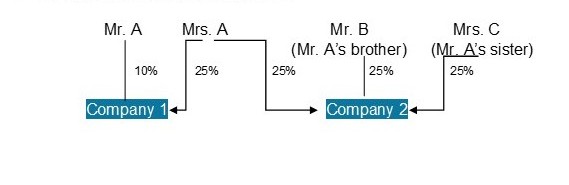
- Each company is controlled by a group of people and all of those people, within and between groups, are related. Furthermore, one or more persons who are members of both related groups own, in total, at least 25 per cent of the issued shares of each company.
Example of Associated Companies
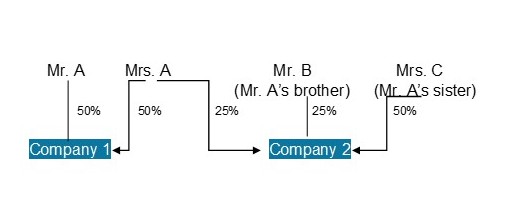
- Related Persons: Two people are considered to be related if their relationship is, by blood or in-law, one of the following: spouses, siblings, parents, grandparents, great-grandparents, child, grandchildren, great-grandchildren, aunts, uncles, nieces, nephews or cousins.
Appeals
An appeal is a formal request by an operator to have a departmental decision reviewed.
- To be considered, an appeal request must be submitted within 10 business days of the decision being made.
- The request must be received via email at falicensing@gov.nl.ca.
- Upon receipt of the appeal request, the company will be contacted once a meeting date has been scheduled with the Fish Processing Licencing Board to hear the appeal.
Licensing Criteria Considered for Approval of Processing Licences
Resource Thresholds
- The establishment of resource thresholds provides the Minister with clear, measurable criteria in their assessment of applications.
- A resource threshold is a target amount of raw material that should be available, on average, to each active holder of a species category authorization before the issuance of additional species category authorizations will be considered. For example, the target resource threshold for shrimp is 4,000 tonnes. This means that the existing six (6) shrimp processors should have combined access to 24,000 tonnes of inshore shrimp quota (4,000 tonnes x 6) before consideration is given to adding further shrimp authorizations.
- Resource thresholds may vary annually and are determined by either quota increases, or a reduction in the number of species category authorizations issued, or both.
- The resource threshold approach is meant to provide a balance between the available resources and the ability of plants to process fish harvested.
- The inshore sector is seasonal and, as such, the number of processing licences and the volume of fish processed must coincide with the landings pattern, market demand and relative capacity utilization in the industry.
- In considering the issuing of new licences, the Minister will use the applicable resource threshold to assess whether existing licence holder’s resource requirements have been reasonably accommodated.
- The applicable resource thresholds will be reviewed periodically by the Minister. This will ensure that the established thresholds continue to meet government policy objectives.
The following resource thresholds have been established for shrimp, snow crab, groundfish, and pelagics species.
Summary of Resource Thresholds
Table 2
| Species Category | Average Tonnes Per Active Licence | Review Level (tonnes) |
| Shrimp | 4,000 | 3,400 |
| Snow Crab | 2,000 | 1,700 |
| Groundfish | 1,000 | 850 |
| Pelagics* | 1,600 | 1,360 |
*excluding squid and smelt
Currently, other species categories have no resource thresholds. Therefore, consideration of new licences for other species categories will consider resource availability which will have to be demonstrated by applicants in submission of their licensing applications and business plans.
Resource Availability
- Resource availability changes dramatically from time to time and, as a result, the processing industry in Newfoundland and Labrador will continue to face challenges related to the quantity of fish that is available for processing.
- Government’s licensing policy aims to minimize the impacts of resource fluctuations so that viable fish processing activities can contribute positively to rural economic conditions.
- Processing capacity is influenced by many factors including seasonality, market conditions and technology. Addressing overcapacity is a challenge but managing processing licences subject to resource availability is a measure that over time will contribute to narrowing the gap between resource availability and processing capacity.
- The Minister will consider whether there is ample resources available to warrant a new licence or licence transfer. Factors considered include: regional capacity, availability of sales outlets and fish stock population.
- Access should not negatively impact other processing operations or regions within the province.
Business Viability
Proponents must demonstrate in their licensing application the viability of the proposed venture and provide detailed information on the following:
- Business Plan that is acceptable to the financing institution funding the business venture. If no financing is obtained, the Business Plan must be acceptable to the Department.
- Production Plan identifying the principal product types and the anticipated production.
- Marketing Plan that identifies the principal target markets and anticipated prices.
- Employment Plan including the number of jobs to be created and the sources of workers, including employees through the Temporary Foreign Workers Program, if applicable.
- Waste Disposal Plan that is acceptable to the applicable regulatory authorities.
- Copy of Articles of Incorporation and confirmation of good standing with Registrar of Companies. Verification of acceptability needs to accompany the plan.
Regional Balance
- Regional balance refers to a matching of processing capacity to adjacent resources in a geographical area.
- The Minister will consider regional balance issues in cases where overall province-wide capacity reduction objectives will not be adversely affected. Regional balance is a desirable objective and will be an important consideration in assessing applications.
- The nature of the industry prevents a mathematical formula approach to the application of the regional balance criterion. Regions can often be defined based on geographic features such as peninsulas (e.g., Burin Peninsula, Northern Peninsula, Bonavista Peninsula and Avalon Peninsula). Each of these peninsulas or regions is adjacent to NAFO Management Zones (see Annex E) and adjacent harvesters are licensed to prosecute fisheries in the regions.
- Consideration will be given to the volumes of raw material landed in a region versus the number of plants in that region and the associated processing capacity.
Location Criteria
- Analysis of applications for new licences and licence transfers will take into account various criteria, including:
- Proximity to resources to be processed;
- Existing processing facilities;
- Existing harbour facilities for landing, offloading and tie-up requirements; and existing industrial infrastructures;
- Where the Minister is considering multiple applications for a species or species category within a region, licensing applications for the given species category will be assessed based on the proposed processing facility’s proximity to the fish resource.
- Proximity will be a key factor in determining the addition or transfer of a species category and will focus on efficient delivery of raw material to the plant in question to minimize trucking and steaming distances.
Corporate Concentration
- The Minister will consider the level of concentration of ownership when evaluating requests for changes of operator, licence transfers, and the issuance of new licences.
- The intent of this policy is to ensure that no single company or corporate group attains a position within the industry that could result in it having an undue influence in day-to-day dealings with harvesters or other processors. The measure supports a fair, competitive, and sustainable operating environment in the sector.
- The Minister will assess how corporate concentration affects the price paid for raw materials and the delivery of services within the province. This approach ensures that industry structure supports fair competition, access, and sustainable economic activity.
- All applicants are required to provide a complete profile of company ownership as part of the application process. This profile must include a complete list of all shareholders.
- For non-publicly traded companies, any shareholder holding five percent or more of the company’s share who also operates, or shares ownership in, another fish processing company within the province must disclose their ownership interest in that additional company or companies. This requirement ensures transparency in ownership structures and supports the Minister’s assessment of corporate concentration.
Compliance
The applicant confirms responsibility for verifying that the operation of the fish processing plant complies with all applicable federal, provincial, and municipal legislation, regulations, by-laws, and the requirement of relevant regulatory authorities, including, but not limited to:
- Canadian Food Inspection Agency.
- Fisheries and Oceans Canada.
- Environmen Conservation and Climate Change (Provincial and Federal.)
- Permits required by the Department of Government Services and relevant municipality
- Building codes (Provincial and Municipal).
- Occupational Health and Safety. Department of Government Services.
- Workplace, Health and Safety and Compensation Commission of Newfoundland and Labrador (WorkplaceNL).
Annex A – Licensing Fees
The following licence fees apply to various types of licences and species category authorizations. Fees associated with species category authorizations apply only to primary processing licence holders.
| Licence Category | Base Fee |
| In-Province Retail Processing | $1,000 |
| Secondary Processing | $1.000 |
| Aquaculture Processing | $1,000 |
| Regular Fish Buyer’s | $1,000 |
| Outside Fish Buyer | $2,500 |
| Handling and Grading | $1,000 |
| Research and Development | $0 |
| Food Establishment Buyers | $100 |
| Primary (Species) | Base Fee | Surcharge/Tonne |
| Groundfish | $1,500 | $0.50 |
| Pelagics | $1,500 | $0.50 |
| Snow Crab | $4,000 | $5.00 |
| Shrimp | $2,500 | |
| Clam | $2,000 | $5.50 |
| Crab, Other | $500 | |
| Eel | $500 | |
| Lobster | $500 | |
| Lumpfish | $500 | |
| Mussels (Aquaculture) | $500 | |
| Salmonids (Aquaculture) | $500 | $1.50 |
| Salmonids (Wild) | $500 | |
| Scallop | $500 | |
| Sea Cucumber | $500 | |
| Seal | $500 | |
| -Seal Meat | N/A | |
| -Seal Oil | N/A | |
| -Seal Pelts | N/A | |
| Squid | $500 | |
| Tuna | $500 | |
| Whelk | $500 | $2.00 |
Annex B – Application Forms
All applications forms can be found online here
Annex C – Non-Refundable Application Fees
| Type of Application | Fee |
| New primary processing licence (one or more species) | $7,500 |
| New species to be added to a primary processing licence | $2,500 |
| New emerging species to be added to a primary processing licence | $1,000 |
| New secondary processing licence (one or more species) | $1,000 |
| New species to be added to a secondary processing licence | $1,000 |
| New primary processing licence for aquaculture | $1,000 |
| New species added to a primary processing licence for aquaculture | $1,000 |
| Conditional facility | $3,500 |
| Transfer of a whole licence (all species) between existing processing facilities. | $7,500 |
| Transfer of a whole licence (all species) from an existing processing facility to a new processing facility. | $7,500 |
| Transfer of one or more species from an active fish processing facility to another active fish processing facility | $2,500 |
| Transfer of all species to an in-province retail processing licence | $1,500 |
| Transfer of one or more species from an active in-province retail facility to another active in-province retail facility | $1,000 |
| Change of operator | $2,500 |
Annex D – NAFO Management Zones
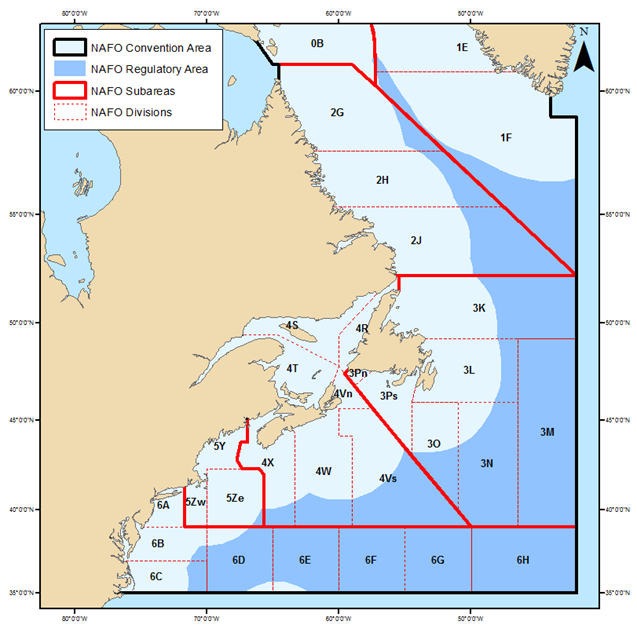
Annex E – Glossary of Terms
Agency Agreement means an agreement between a fish processor licensed to buy and process a particular species category and another licence holder not licensed for the species category in question. The Agency Agreement enables the latter to buy fish or marine plants on behalf of the former.
Aquaculture Products are those fish products that are harvested from an aquaculture site licensed under The Aquaculture Act and processed in Newfoundland and Labrador.
Carton includes a type of receptacle, package, wrapper or confining band used in holding, storing, packing or marketing fish or marine plants.
Change of Operator means a change in the corporate structure of the company currently holding/controlling a fish processing or fish buyer licence through an issuance or transfer of shares which affects de facto control.
Conditional Processing Facility Licence is an authorization issued by the Department of Fisheries and Aquaculture that provides an applicant with a conditional right to develop, purchase, or construct a fish processing facility. This licence does not grant the authority to process.
Container refers to any means by which fish or marine plants may be held and includes a vessel hold, boat pen, vehicle storage area, tote pan, fish bag and an insulated box.
Corporate Concentration is accumulation of production and market power by firms through internal growth or by corporate acquisition.
De Facto Control refers to the ability to control ‘in fact’ by direct or indirect influence of a person, corporation, and/or shareholder.
Department refers to the Department of Fisheries and Aquaculture, unless stated otherwise.
Emerging Fisheries are developmental fisheries for species which have not traditionally been harvested to any significant extent.
Establishment means a place where fish or marine plants are handled, processed, graded or stored, or where records relating to that handling, processing, grading or storing are kept.
Fish include finfish, marine invertebrates or marine mammals, whether caught or farmed, and parts, products or by-products of them.
Fish Landing Station means any site where fish or marine plants are offloaded for the purpose of marketing.
Food Establishment Licence means a licence that has been approved by the Department of Health and Community Services and has been issued to a facility by the Department of Government Services, under the authority of the Food Premises Regulations of the Food and Drug Act for the preparation of fish products for over-the-counter sales.
In-Province Retail Processors are processors who are authorized to buy and process all species categories for the purpose of supplying fish products for sale in the Province of Newfoundland and Labrador: (a) to the ultimate consumer; (b) to retail establishments (e.g., convenience stores and supermarkets) for sale to the ultimate consumer; or (c) to food establishments (e.g., restaurants) that prepare and serve fish products to the ultimate consumer.
Inspector means an inspector, officer or other person designated by the Minister to exercise the powers of an inspector under the Fish Inspection Act or the regulations.
Licence is a written authorization from the Minister which enables a fish processing facility to process one or more species categories.
Licence Transfer is the movement of one or more species categories from one fish processing facility to another, resulting in the elimination of those species categories from the originating licence.
Licence (Licensing) Year runs from April 1 of a year to March 31 of the following year. Any licence issued during a licensing year automatically expires at the end of the licensing year (i.e., March 31).
Marine Plants includes Irish moss, kelp, and other marine plants, parts, products or by-products of them.
Marketing means buying, selling, holding in possession, offering or advertising for sale of fish or marine plants.
Minimum Processing Requirement means the minimum amount of transformation of a species from its live and/or landed state before the product may be shipped from Newfoundland and Labrador, as established in the Fish Inspection Operations Regulations.
Minimum Production Requirement means the minimum amount of production required by the Minister to be processed by a processor in order to maintain a species category authorization.
Minister refers to the Minister of Fisheries and Aquaculture.
Northern Labrador is defined as the portion of Labrador located North of Lake Melville.
Person includes a corporation and the heirs, executors, administrators, or other legal representatives of a person.
Primary Processing means the processing of fish as part of its preparation for market by applying any one or more of the following processes to it: washing, cleaning, icing, skinning, shucking, filleting, portioning, pickling, cooking, salting, curing, drying, freezing or canning. A primary processed fish or seafood product is one that has been washed, cleaned, iced, skinned, shucked, filleted, portioned, pickled, cooked, salted, cured, dried, frozen and/or canned.
Regional Balance means a degree of balance between the amount of a species landed in a region and the amount processed there.
Resource Threshold refers to the average volume of raw material of a species category that must be available per year, per active processing licence, before additional processing facilities may be eligible to be considered for a new authorization for the species category in question.
Secondary Processing (Products) means the processing of fish as part of its preparation for market beyond the primary processing stage. This can be achieved by (1) adding one or more ingredient(s), other than water or salt, which results in a substantive increase to the bulk and/ or a substantive transformation to the taste and texture of the fish as a food product (e.g., au gratin, chowder or sauce); or (2) applying some other treatment or process to it, other than salting or curing, which results in a significant taste, flavour and/or texture enhancement of the fish as a food product (e.g., breading, battering, smoking, marinating or pasteurizing).
Species Category means a single biological species or a group of related species (e.g., pelagics) for which one licensing authorization may be given.
Value-Added Processing of Snow Crab means the processing of snow crab for market in any form other than as crab section industrial packs and/or whole crab. Examples include snap and eat, consumer pack and meat products.
“Snap and Eat” products are identified as sections on which the individual legs have been scored or notched in order to allow the consumer to more easily break the shell of the crab section and to extract the meat.
“Consumer pack” products are identified as packages or containers of snow crab sections, not exceeding ten pounds, which contains a quantity of product which would be sold at retail establishments for sale to a final consumer.
“Meat products” are identified as cap-on claws; cap-off claws; broken leg meat; leg meat; minced; combination packs; and salad packs.