
The Groundwater Section has a number of brochures that are available on-line or can be ordered at no cost by calling or writing to the address shown at the bottom of the page. These include:
|
|
Before You Drill Your Water Well (394 KB)
The initial decision to have a well drilled involves a number of questions that need to be answered to ensure that a properly planned and constructed well will yield water of good quantity and quality year after year. This brochure provides guidance to help the prospective new well owner answer such questions as: Where do I locate my well? How do I select a well driller? How much water do I need? How do I finish my well? |
|
|
Completing Your Water Well (774 KB)
After a well is drilled, the well owner or a contractor must complete the actual hookup to the home or establishment. Many well owners will make arrangements with either the well driller or a contractor to complete the well. This brochure provides information that the home owner should know about pump installation, types of pumps, pressure tanks, completions methods, and air vents. |
|
|
After You Drill Your Water Well (774 KB)
Once a well has been drilled, there are do’s and don’t associated with maintaining a well in a satisfactory condition. This brochure addresses ways to protect a well from pollution and to protect other groundwater users nearby should a well be abandoned. |
|
|
Protecting Groundwater – Nature’s Hidden Treasure (198 KB)
Groundwater lies beneath all of us and is found in the tiny pores between soil and rock particles and in bedrock fractures. This brochures answers question about how groundwater resources are used in Newfoundland and Labrador, how groundwater becomes contaminated, and lists preventative measures to protect your source of potable water. Prevention is the key to reducing groundwater contamination. |
|
|
Public Groundwater Supplies, Wellhead Protection Program (483 KB)
This brochure outlines a 5 step program that towns and communities can do to protect their water resources. Steps such as forming a planning team, delineating a wellhead protection area, identifying potential sources of contamination, managing the protection area, and planning for the future, are important in protecting a wellhead area. Help from government is freely given to assist in these undertakings. |
|
|
Guidelines for Disinfecting Dug and Drilled Wells
The purpose of disinfecting a dug or drilled well is to destroy all disease producing organisms which may have been introduced into the well during construction, hookup, and subsequent maintenance of the well and water supply system. This brochure explains the types of disinfectants, dilution rates, disinfection procedures, and follow up testing necessary to properly disinfect a well. |
|
|
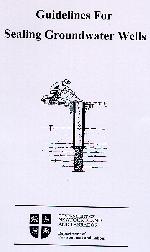
Guidelines for Sealing Groundwater Wells (185 KB)
Water wells that are abandoned must be properly sealed to prevent groundwater contamination from occurring via the wellbore. These guidelines explain the proper materials and steps necessary to properly seal an abandoned drilled well. |
To order any of these brochures please contact us.
Adobe® Acrobat® Reader software can be used for viewing PDF documents. Download Acrobat® Reader for free.